

Contractors
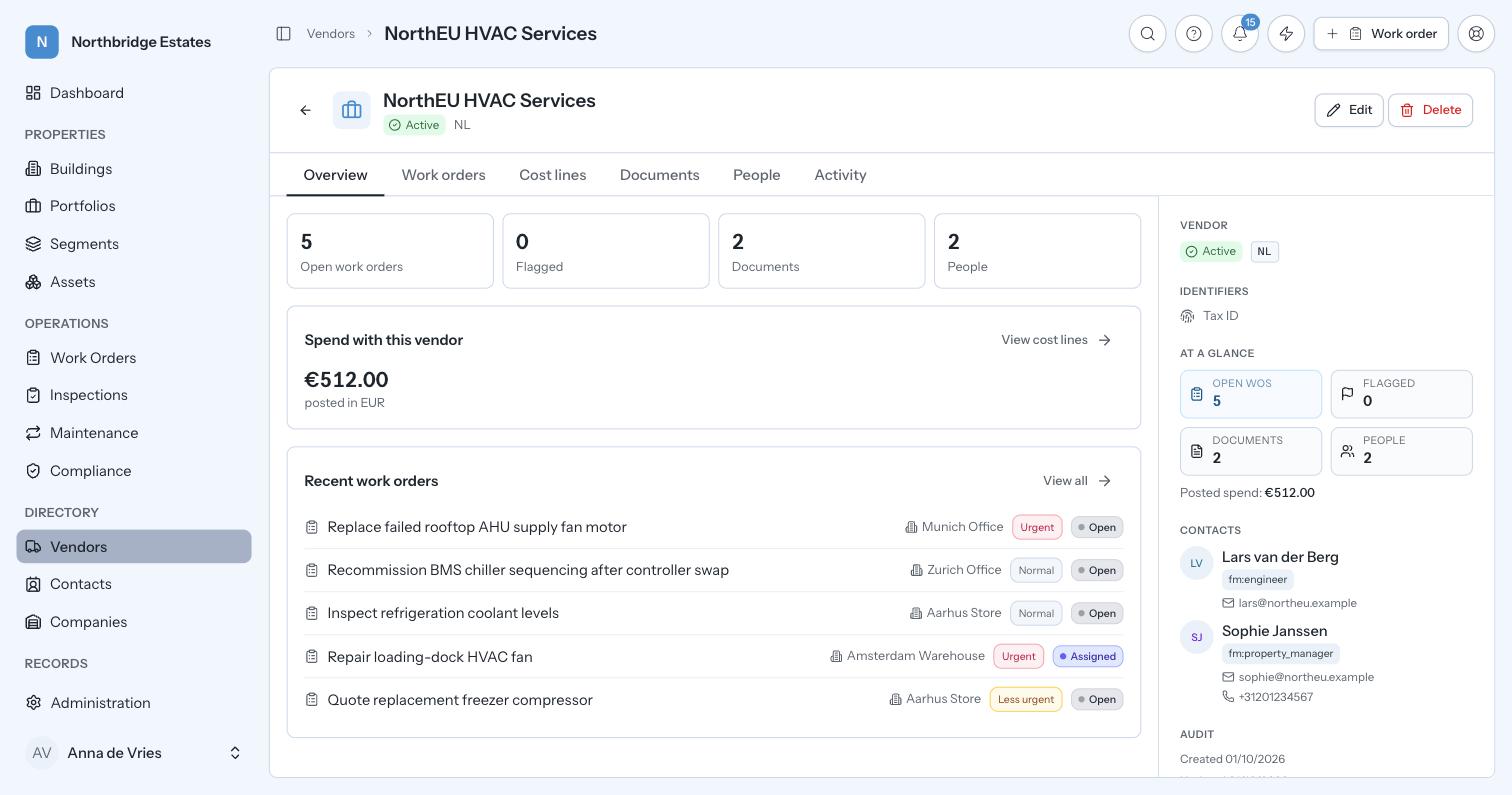
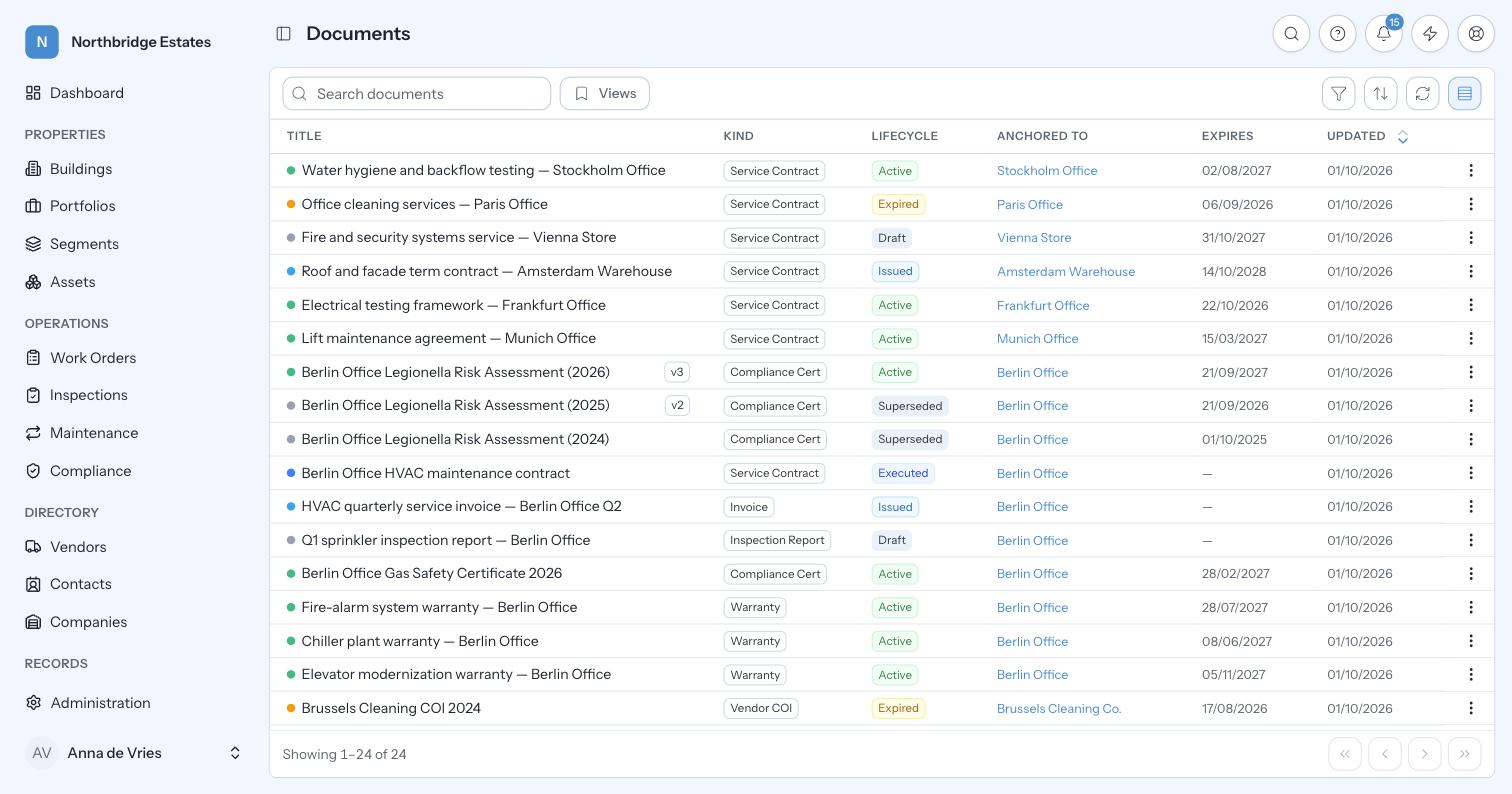
Insurance, contracts and spending limits as live records with dates on them, not folders somebody forgot to open. Contractors and suppliers sit in one central register with their service agreements,…
 English (UK)

Every euro attributed, and a changed number that leaves a trace.
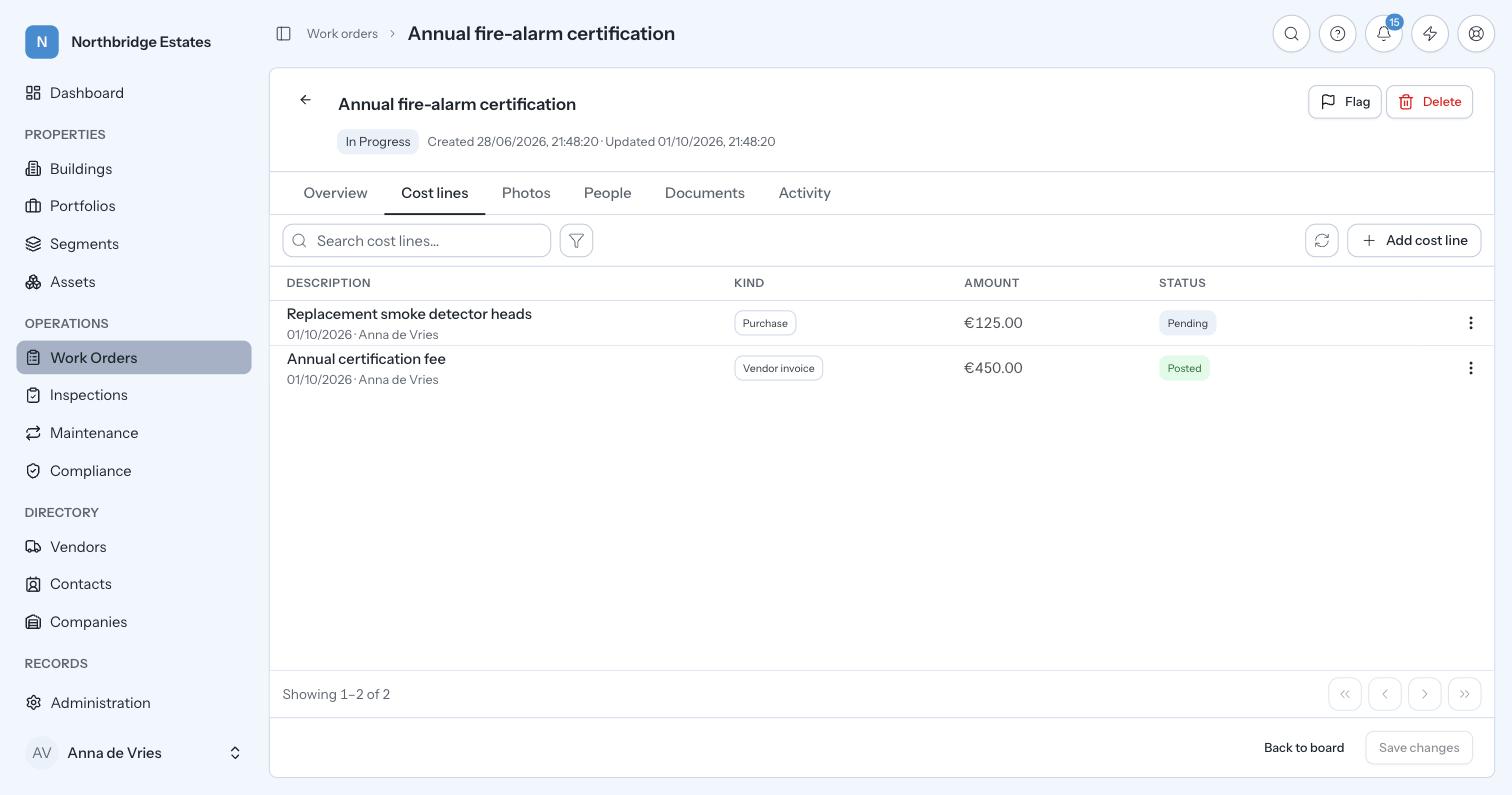
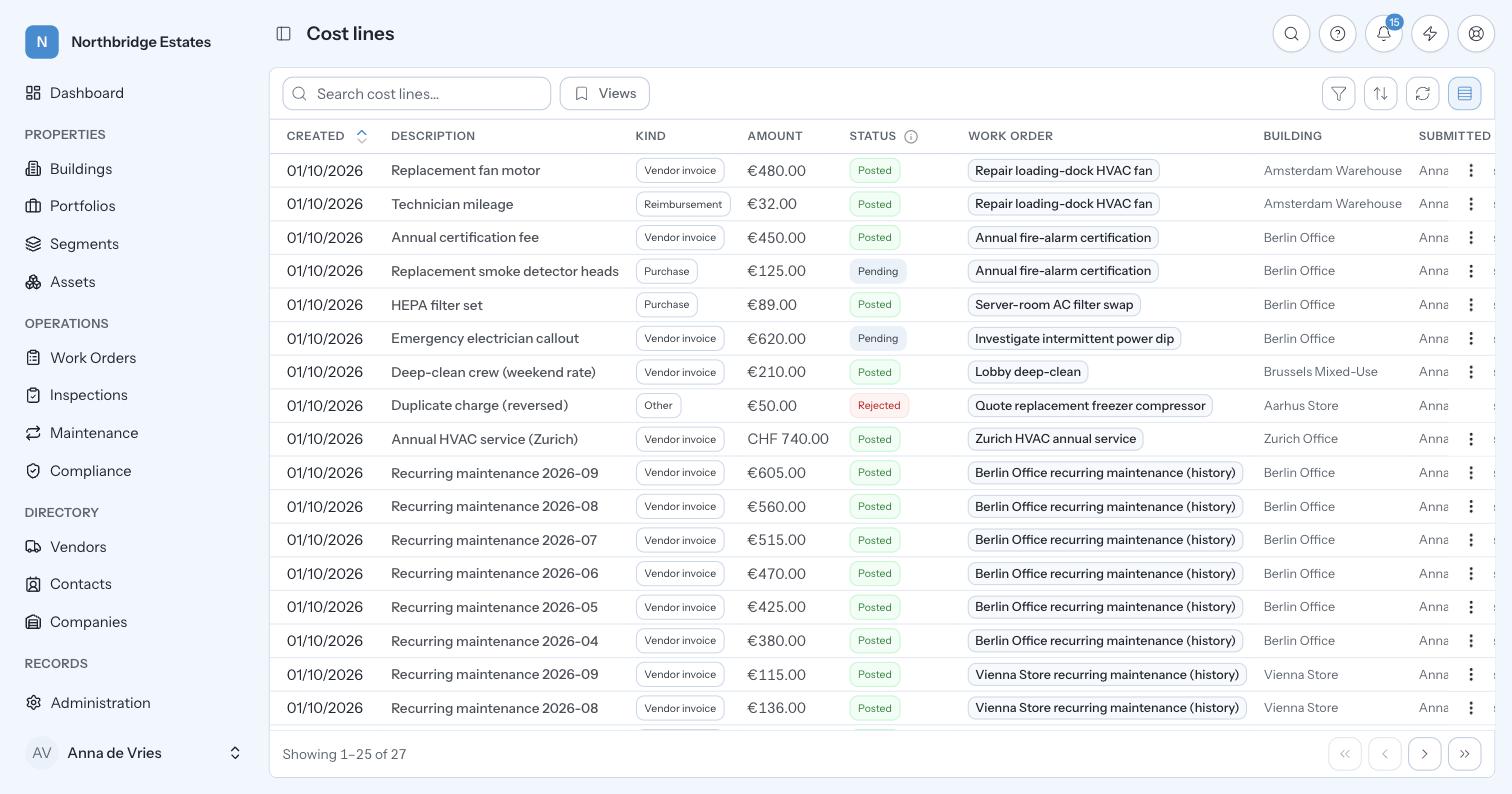
Costs attach to the work order as lines: invoices, labour and materials, approved, posted, and rolled up by building and by trade. Labour is valued at the rate in force when the hours were logged and is never re-priced afterwards, and when somebody changes a recorded cost, Prova logs an official correction instead of overwriting the original entry. Spending limits are defined at multiple levels and across different currencies, with approvals climbing the requester’s reporting line and falling back to the designated approver above the building, then to the owner. Consolidated expenditure reports can be pulled by site or by period with the invoices still attached.
A number that can be changed without trace is a number nobody trusts. Correction logging is what allows a finance team to accept operational cost data without re-keying it, and it is the difference between a spend report and an auditable one. On the control side, delegated authority written into a policy document is not enforced, while delegated authority built into the approval path is. The escalation fallback is the practical part, because most approval systems fail on absence rather than on policy, and a request stuck behind one manager on leave is how people learn to work around the system.
Cost lines
Invoices, labour and materials against the work order. Approved, posted, and rolled up by building and trade.
Correction logging
A changed cost is logged as an official correction, never an overwrite of the original entry.
Labour
Hours logged on work orders, valued at the rate in force when logged.
Approvals
Spend and completion sign-off, climbing the requester's reporting line with a fallback above the building, then the owner.
Spending limits
Multi-level limits and approval workflows across different currencies.
Accounts
Ledger accounts per building, asset, vendor or job. Balances computed from the rows, never stored.
In practice
A repair quoted at 2,400 euro invoices at 3,150, and the site manager cannot approve the difference.
Finance accepts the figures without re-keying them, because every number can be traced and every change left a mark. The pattern is visible too: three of five air handling repairs this year came in above quote, all from the same contractor. One invoice at a time, that looks like nothing.
Illustrative walkthrough. Not a customer record.
Corrections are logged rather than overwritten and balances are computed from the rows rather than stored. That is what makes it auditable rather than merely reported.
Spending limits and approval workflows are defined across currencies, which is where a euro-denominated limit usually stops constraining anything.
No. It attributes operational spend to the job, the asset and the building, with the invoice attached, so what reaches finance can be trusted without re-keying.
Next step
Thirty minutes on your own estate: your buildings, your obligations and your numbers. We will show you where the time and the money are going.
Book a demo