

Contractors
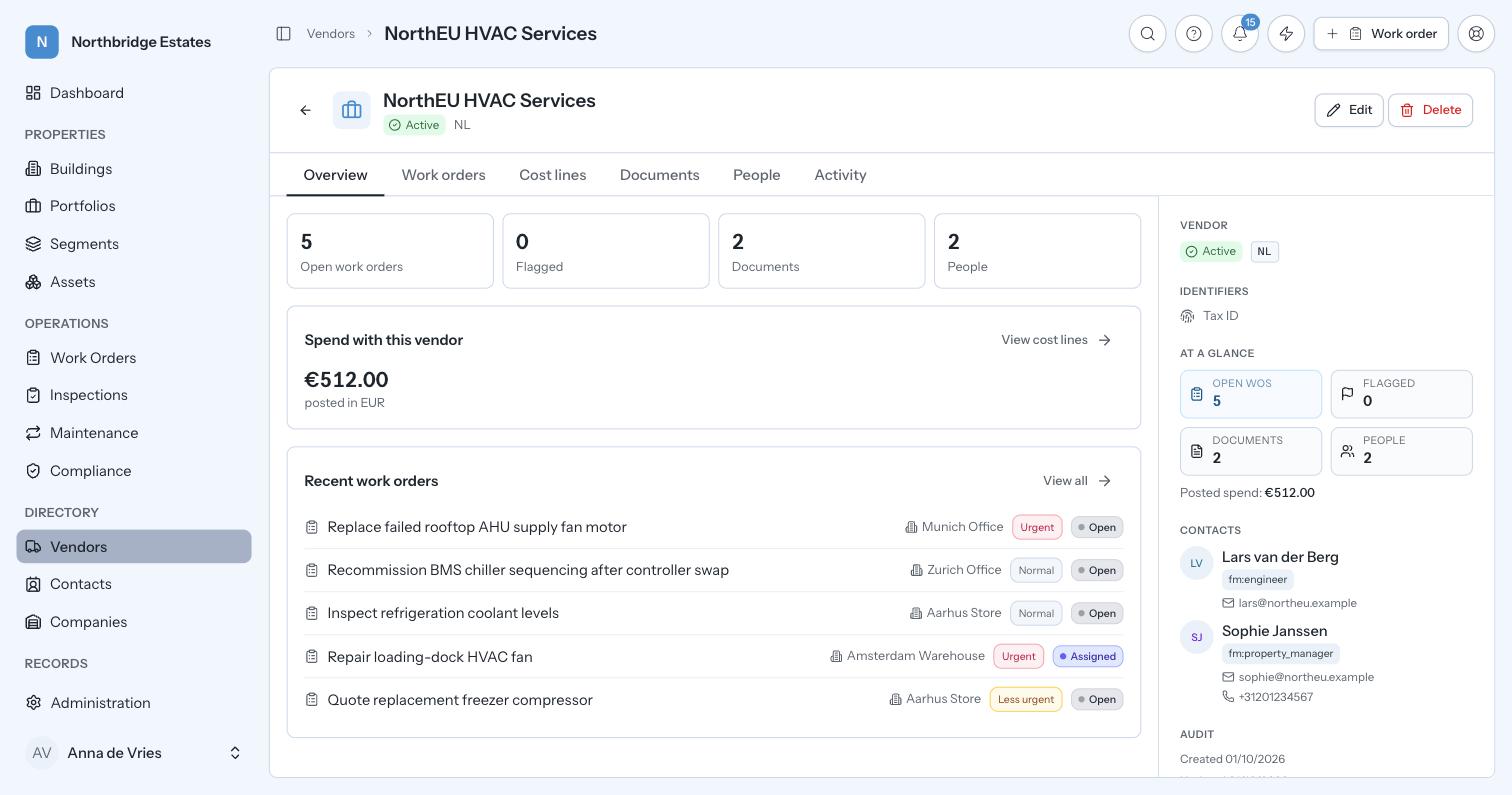
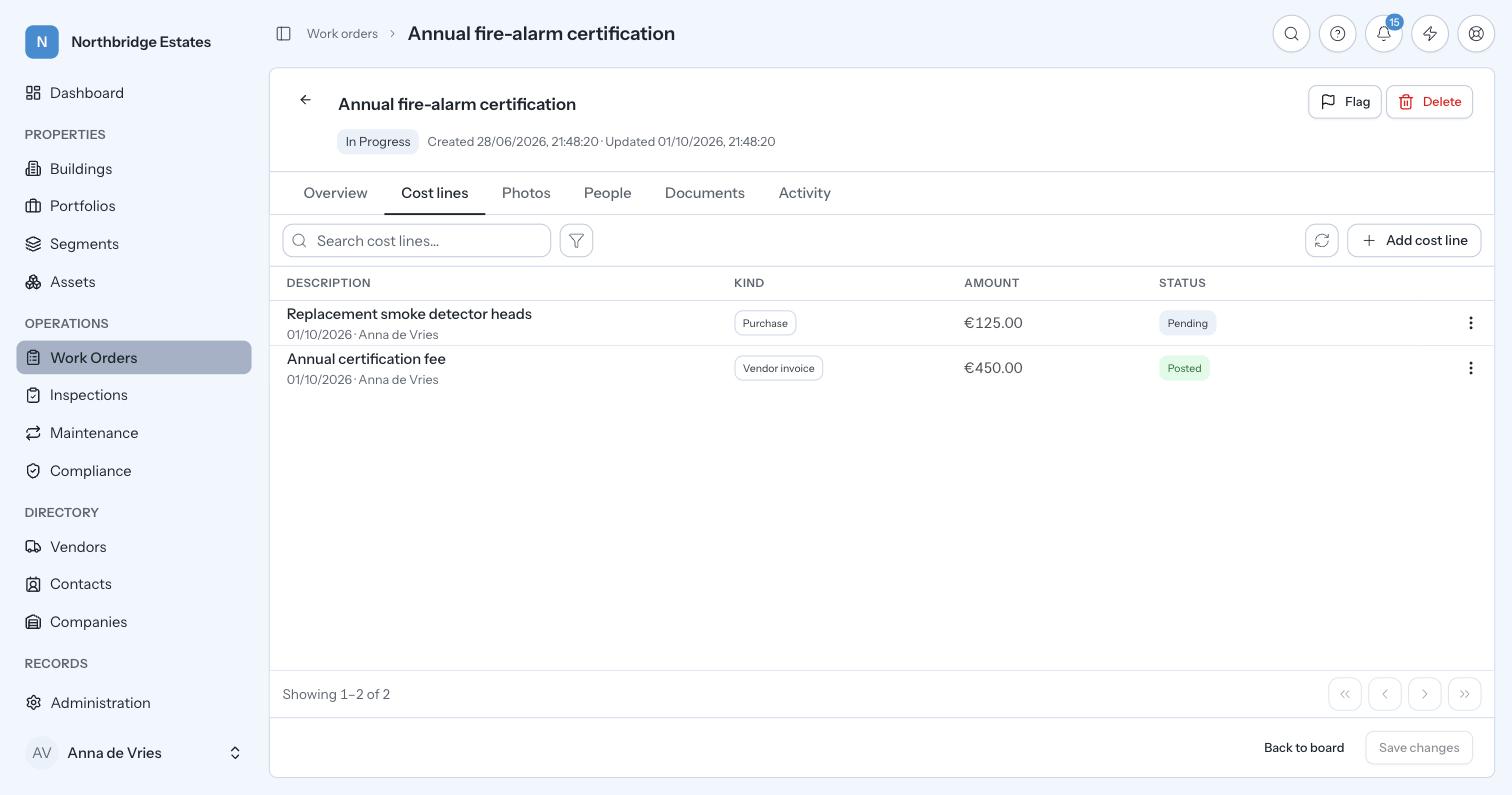
Insurance, contracts and spending limits as live records with dates on them, not folders somebody forgot to open. Contractors and suppliers sit in one central register with their service agreements,…
 English (UK)

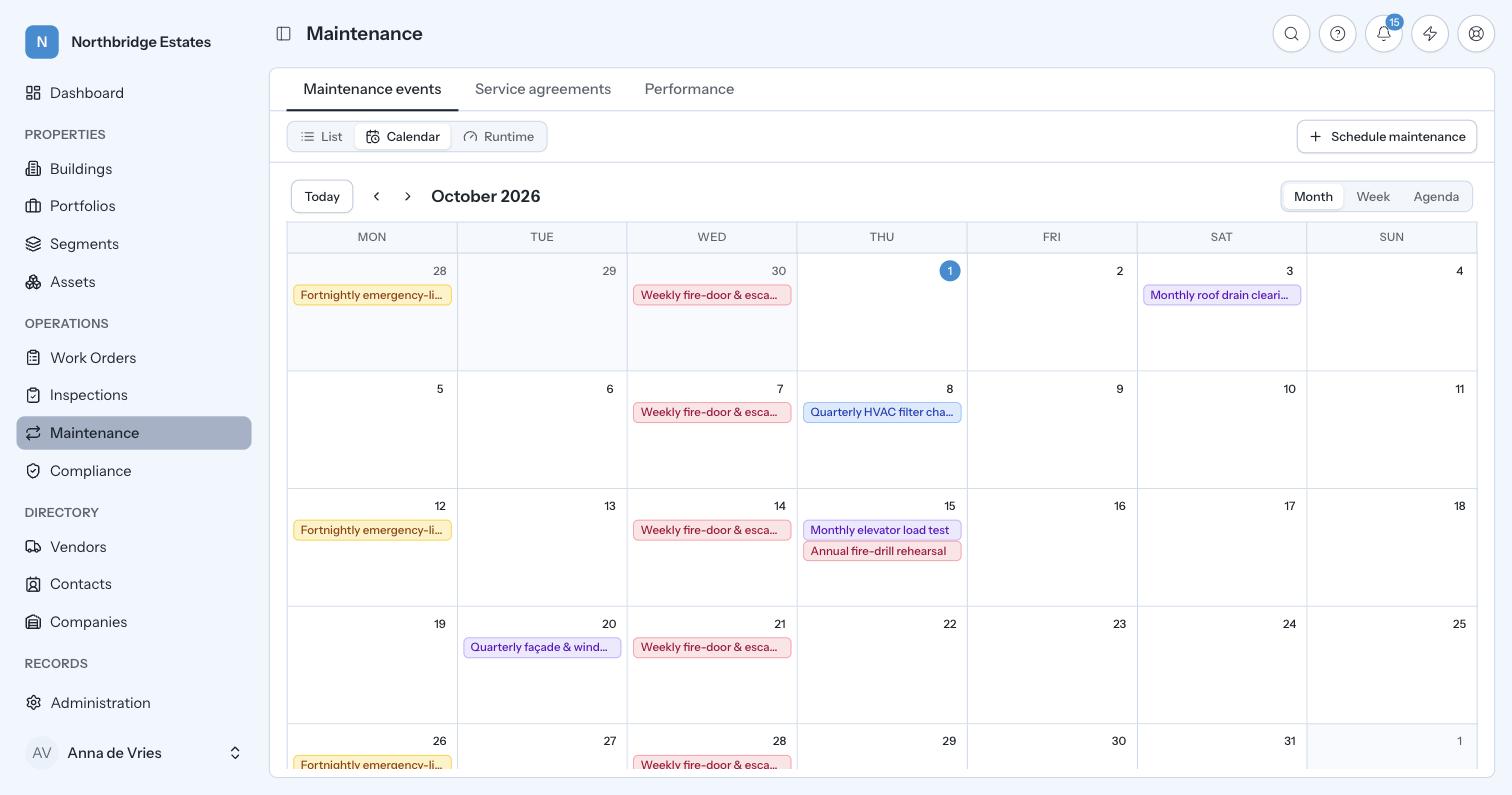
Plans on a date cadence or a runtime counter. When one falls due, the work order appears.
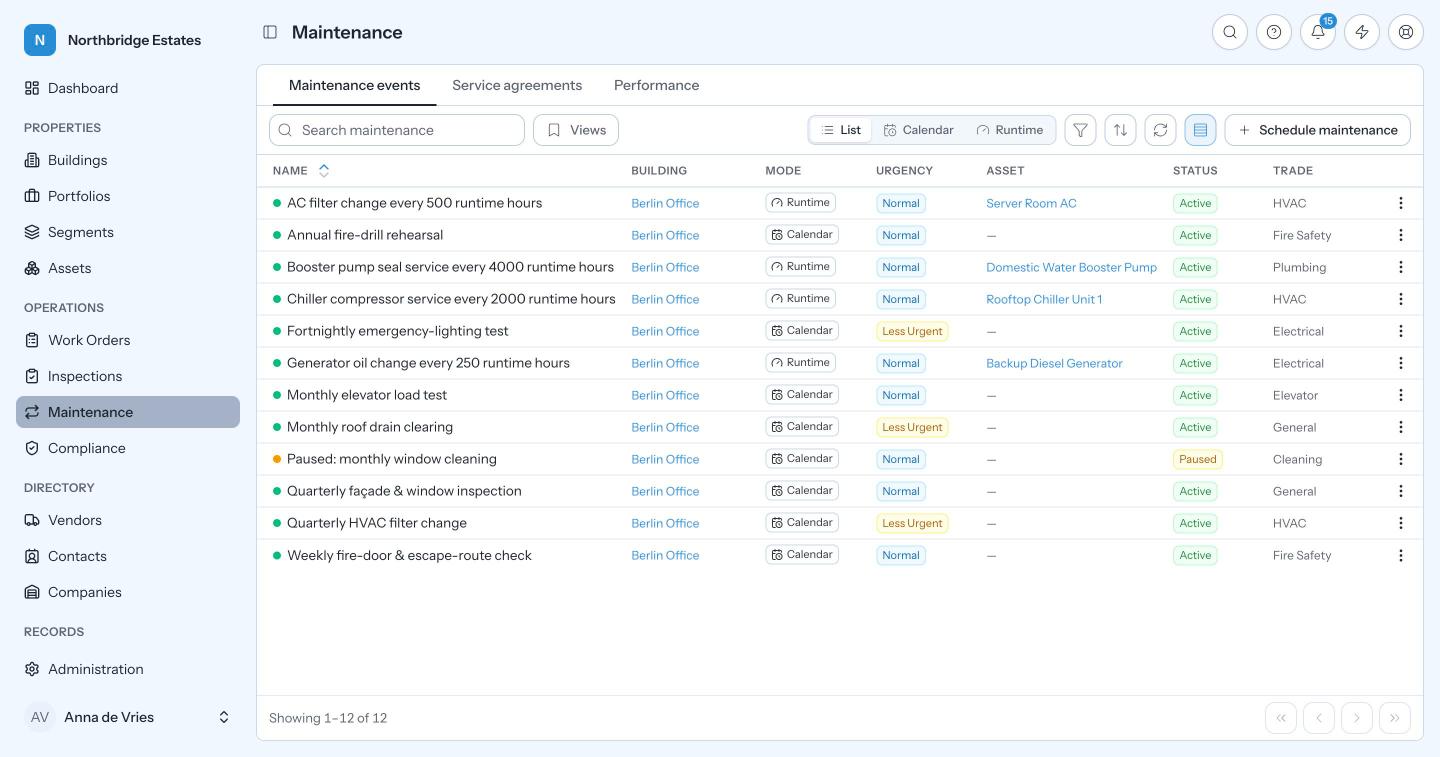
A maintenance plan defines a cadence, such as quarterly or the first Monday of the month, and Prova materialises it into dated occurrences across a rolling eighteen-month horizon. When an occurrence falls due, the work order is raised against the right asset with the relevant service agreement already attached. Plans can also run on usage instead of dates: an asset’s runtime meter is fed either by manual readings or by an operating schedule that accrues hours per weekday in the site’s timezone and stops on that jurisdiction’s holidays, and the service order is raised when the counter passes its threshold. Editing a plan regenerates only future dates, and readings are append-only, so a correction supersedes an earlier reading rather than erasing it.
Planned maintenance rarely fails because a team forgets the concept. It fails because the calendar lives in somebody’s head, and leaves when they do. Putting the cadence into the system turns it into forecastable workload, so you can see next quarter’s servicing before you commit the budget. Usage-based plans then fix the other half of the problem: servicing a standby generator every six months regardless of use either wastes money or misses real wear.
Recurrence rules
A standard calendar cadence (RFC 5545) over a subject, with a rolling 18-month horizon. Edits regenerate only the future.
Occurrences
Each date on the calendar. A due date raises its work order automatically, or on demand.
Planned by date
Weekly, monthly or annual routines planned in advance, so upcoming workload can be forecast.
Planned by usage
Service orders triggered on equipment runtime readings rather than calendar dates.
Business calendars
Holiday-aware date arithmetic per jurisdiction. Operating schedules accrue zero machine-hours on holidays.
Reminders
Task alerts and weekly status summaries for upcoming or overdue maintenance.
In practice
Two pieces of equipment need servicing on completely different logic, and neither depends on anybody remembering.
One estate, two maintenance philosophies, no calendar in anybody’s head. The quarterly plan forecasts workload before the budget is committed; the usage plan stops you servicing a generator that has barely run.
Illustrative walkthrough. Not a customer record.
The cadence lives in the system rather than in a calendar, and reminder rules are declared against the obligation rather than against an individual.
No. Date-based and usage-based plans coexist, chosen per asset.
Business calendars are holiday-aware per jurisdiction, and operating schedules accrue no machine-hours on them.
Next step
Thirty minutes on your own estate: your buildings, your obligations and your numbers. We will show you where the time and the money are going.
Book a demo